The Design of Everyday Things
By: Donald Norman
I thought this book overall was very interesting. Some people complain about
how dated this book is since it came out in 1988, but I think its amazing to
see him wish for some things such as phones that act like computers appear
today. It also adds some nostalgic charm like when he tells the reader how to
put a NES cartridge in the system. In terms of the content, this book gave me
new perspectives. I had never critically evaluated everyday designs as much as
this book did. I will never look at a refrigerator or faucet the same again. I
knew many of the things he was talking about in the book but I never gave them
concrete names. For instance, the way he describes short term memory vs long
term memory and all of the different ways we can recall memories.
Some of the things that I loved about the book were the different views he
gave me on some ideas. I've heard the term taught helplessness but I never
quite thought it afflicted many people. I realized that this probably affects
everyone at college especially on our message boards when we discuss homework.
Other students in the class do not want to post on these boards because they
are afraid of looking stupid to their peers. In reality, each and every one of
us needs to seek help and not just think we cannot do a particular subject such
as math.
My favorite chapter was the one where he talked about how to simplify design and not get too aesthetic or too technical. This means that we should find a nice balance for our ideas to reach the biggest market of customer possible. He also mentioned that the programmers should not be the U.I. designers. This makes sense to me as even though the programmer knows all of the functions behind their code, they may not know how to best arrange them. For instance, the designers of Microsoft Excel know where everything is, so they might put functions in sub menus that they think are optimal but in reality, the common man would have no chance of finding it.
In conclusion, The Design of Everyday Things was a good book. Even despite being horrendously dated, most if not all of his ideas hold up in this day and age. The examples he gives for bad designs in our everyday life has made me do a double-take on every object I come across to make sure its a good design. In the future, I hope that I can incorporate some of the fundamental ideas that Donald Norman wrote about in all of my future designs.
Thursday, September 20, 2012

Assignment #2 Design of Everyday Things Chapter Thoughts
Chapter 1
This chapter made me realize how important design is on a product's welfare. If the product has a bad design, it will be befuddled by terrible controls and a bad U.I.. It also made me rethink all of the items I take for granted every day. For instance, the smart phone that I use. Thought and consideration went into every placement of every button to make it easier for the end user. I would not think that you would need an engineering degree to design such a slick U.I., but it would definitely help in understanding where to place certain things.
Chapter 2
This chapter reminded me of my time at college and whether or not to ask teachers questions. Taught helplessness is pretty much exactly what I thought of my math class. When I first took calculus 2, I thought it was the hardest thing I have ever taken. Eventually, once I got further behind in my school work and did poorly on a test or two, I figured it was impossible to come back. Luckily, I got over this hump but it still is a serious problem for a large amount of students. We also use forums a lot to ask questions in classes. I also think that most students do not ask in the blog because they are scared of sounding stupid to their peers.
Chapter 3
This chapter was very straight forward so I don't have many strong thoughts on it. It was interesting to index the different kinds of memory. Having signs and reminders in real life is a good way to jog our memory. He said in the book that the person will automatically remember really important events but I find in my life that I can only remember 1 really important thing at a time. This is why I have to use a planner instead of just counting on myself to remember. Now if only I could get myself to check it everyday.
Chapter 4
This chapter talks about constraints and how they very in different categories and even in different cultures. I found cultural constraints the most interesting because they differ from country to country or even from workplace to workplace. Building a lego motorcycle truly was the perfect example for this chapter because it calls for all different kinds of restraints. The police sign is face-up only in countries where text is read that way. Logical constraints in that all pieces must be used. Semantic restraints in how we all know how a motorcycle works and that the rider faces forward. Physical based on the shape of the motorcycle. In order to have good restraints, you need good visibility and feedback.
Chapter 5
Chapter 5 talks about the different types of slips a human can make. I have experienced each and everyone of these but my favorite personally is the loss-of-activation error. I cannot count how many times I've walked into a room only to forge why I was there. As for as design goes, hopefully most of them tailor more towards human error. Back in the day, if you entered a command wrong, you had to go through the whole process again. Now there are warning signs for say when we are deleting something. An instance when the design goes to far in protecting the user is in Windows Vista. Vista's UAC had to ask the user every time he or she wanted to do something which is terrible design.
Chapter 6
Chapter 6 states that design is a constant battle between usability and aesthetics but problems occur when one controls too much. This makes me think of designs that are so simple, its not intuitive on what functions they can perform. On the contrary, designs that are so complicated, you don't even know how to start using the device. My smartphone has had some creeping featurism problems. What started out slick and easy to use, is starting to look convoluted and complicated. Designers must consider both ends of the spectrum and try to not focus too much on one.
Chapter 7
While chapter 6 focused on broad design principles, chapter 7 goes into the specific designs. I never thought about some of these design facts, but making a design easy to evaluate is imperative. This means trying to make it similar to real world examples and give the user feedback on what state its in. The most important aspect is to keep in mind humans will be using this design. Humans make mistakes and need an easy way to escape those mistakes. Designs should be planned for errors in mind and they should not just crash when the human makes an error.
This chapter made me realize how important design is on a product's welfare. If the product has a bad design, it will be befuddled by terrible controls and a bad U.I.. It also made me rethink all of the items I take for granted every day. For instance, the smart phone that I use. Thought and consideration went into every placement of every button to make it easier for the end user. I would not think that you would need an engineering degree to design such a slick U.I., but it would definitely help in understanding where to place certain things.
Chapter 2
This chapter reminded me of my time at college and whether or not to ask teachers questions. Taught helplessness is pretty much exactly what I thought of my math class. When I first took calculus 2, I thought it was the hardest thing I have ever taken. Eventually, once I got further behind in my school work and did poorly on a test or two, I figured it was impossible to come back. Luckily, I got over this hump but it still is a serious problem for a large amount of students. We also use forums a lot to ask questions in classes. I also think that most students do not ask in the blog because they are scared of sounding stupid to their peers.
Chapter 3
This chapter was very straight forward so I don't have many strong thoughts on it. It was interesting to index the different kinds of memory. Having signs and reminders in real life is a good way to jog our memory. He said in the book that the person will automatically remember really important events but I find in my life that I can only remember 1 really important thing at a time. This is why I have to use a planner instead of just counting on myself to remember. Now if only I could get myself to check it everyday.
Chapter 4
This chapter talks about constraints and how they very in different categories and even in different cultures. I found cultural constraints the most interesting because they differ from country to country or even from workplace to workplace. Building a lego motorcycle truly was the perfect example for this chapter because it calls for all different kinds of restraints. The police sign is face-up only in countries where text is read that way. Logical constraints in that all pieces must be used. Semantic restraints in how we all know how a motorcycle works and that the rider faces forward. Physical based on the shape of the motorcycle. In order to have good restraints, you need good visibility and feedback.
Chapter 5
Chapter 5 talks about the different types of slips a human can make. I have experienced each and everyone of these but my favorite personally is the loss-of-activation error. I cannot count how many times I've walked into a room only to forge why I was there. As for as design goes, hopefully most of them tailor more towards human error. Back in the day, if you entered a command wrong, you had to go through the whole process again. Now there are warning signs for say when we are deleting something. An instance when the design goes to far in protecting the user is in Windows Vista. Vista's UAC had to ask the user every time he or she wanted to do something which is terrible design.
Chapter 6
Chapter 6 states that design is a constant battle between usability and aesthetics but problems occur when one controls too much. This makes me think of designs that are so simple, its not intuitive on what functions they can perform. On the contrary, designs that are so complicated, you don't even know how to start using the device. My smartphone has had some creeping featurism problems. What started out slick and easy to use, is starting to look convoluted and complicated. Designers must consider both ends of the spectrum and try to not focus too much on one.
Chapter 7
While chapter 6 focused on broad design principles, chapter 7 goes into the specific designs. I never thought about some of these design facts, but making a design easy to evaluate is imperative. This means trying to make it similar to real world examples and give the user feedback on what state its in. The most important aspect is to keep in mind humans will be using this design. Humans make mistakes and need an easy way to escape those mistakes. Designs should be planned for errors in mind and they should not just crash when the human makes an error.
Assignment #2 5 Examples of Bad Design
1) iPod Car Connector

Bad Reception:
The inherent flaw in these radio connectors for the iPod is they give terrible reception. They transmit the sound through radio channels and if stations are already broadcasting, they overlap each other and award the user with terrible quality. This also happens if other people are using the same device on the same channel.
Conceptual Image:
The image is pretty easy to understand. The user chooses a channel and the connector transmits the sound through the channel.
Mapping:
The buttons map to changing the channel and this brings up another problem because the end user does not know channel will have the clearest quality. Usually the station with the least stations going on has the best reception but it could vary.
Feedback:The feedback is the music that comes through the sound system or even some kind of distorted sound of the radio station. Its hard to say since it gets terrible reception.
2) Logitech Dual-Action Controller

 Unset States:
Since single knob faucets lack a second knob, its always hard to tell if they are in the on or off position. Personally, my single knob at my apartment never shuts off- its always dispensing some amount of droplets of water. My main problem is that you cannot tell when it is off; one just has to push it down and assume its off.
Conceptual Image:
The conceptual image is not great either. The user cannot inherently tell which direction the the faucet goes to turn on, dispense hot or cold water, or turn off. This leads to one bad conceptual image.
Mapping:
One knob is mapping to all of the aforementioned functions. Like I said before, This can be a huge problem when trying to differentiate.
Feedback:
The feedback the faucet gets is either dispensing water or not. Another feedback set is through sensing if its cold or hot water.
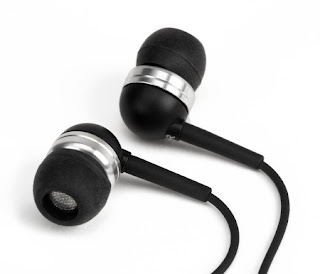
4) Earbuds
 Barely Fit in Ears:
These earbuds offer nice noise cancellation for such a small set. Of course its not going to be on par with those bigger headphones that cover entire ears, but good noise cancellation nonetheless. The part that really irks me is that these things fall out all the time especially when jogging. Its a shame that such a portable addition breaks the design that much.
Conceptual Model:
Most everyone knows how headphones work. They transfer sound through wire and magnets to the ear. If the user plus them into a jack, they will pick up the music.
Mapping:
If one is using an iPod with these headphones, all of the buttons on screen are mapped to changing the song or turning up the volume. The earbuds themselves are not mapped to any buttons but only the sound they transmit to the ear.
Feedback:
The feedback that these earbuds give is the sound of the music playing from the iPod. Like I mentioned, the quality, especially the bass is good for such a small pair, but overall its not a very good set and I recommend a better pair.
5) Dell XPS 1530

Short Battery Life
The battery life on my Dell XPS is only around 2 hours. This is not enough to do much of any work especially if I'm on the internet looking up homework. The battery is also bulky as in it sticks out of my computer and propels it off of the table. This makes the laptop heavier and even puts it at an angle relative to the surface it is on.
Conceptual Model:
No user should be too confused on how the conceptual model works. If they have ever used a laptop, they should know how to operate this machine and how in general it works.
Hard to Remove Keyboard / Mapping:
The keyboard mounted on this machine is extremely hard to remove. To make matters worse, I find it easy to get food stuck under the keyboard. I either have to live with the dust and or crumbs under the keyboard, or painstakingly remove each key. The mapping of each key to their respective letter or function is satisfactory. There really are not any frills here in terms of function keys.
Feedback:
There is a good amount of feedback on the screen especially when the user is typing. Obviously the keystrokes that were hit appear on the screen. The computer also makes some indescribable mechanical sounds to let the user know when it has been turned on.

Bad Reception:
The inherent flaw in these radio connectors for the iPod is they give terrible reception. They transmit the sound through radio channels and if stations are already broadcasting, they overlap each other and award the user with terrible quality. This also happens if other people are using the same device on the same channel.
Conceptual Image:
The image is pretty easy to understand. The user chooses a channel and the connector transmits the sound through the channel.
Mapping:
The buttons map to changing the channel and this brings up another problem because the end user does not know channel will have the clearest quality. Usually the station with the least stations going on has the best reception but it could vary.
Feedback:The feedback is the music that comes through the sound system or even some kind of distorted sound of the radio station. Its hard to say since it gets terrible reception.
2) Logitech Dual-Action Controller

Cheap Joystick/D-pad:
The Logitech Dual-Action has a poorly designed joystick which is a problem for all games where you have to move in a 3d environment. The main issue is that instead of a smooth circular casing, the joystick sits in a square. Trying to go from left to top-left to top is a big nuisance since the joystick can get stuck in the corners. I believe the reason they designed it this way was because of pre-existing patents which make sense. I cannot excuse bad design though.
Conceptual Image:
Everyone knows how to use a video game controller. The user should have the image that the joysticks are primary for movement and the buttons are mapped to various functions.
Mapping:
The buttons are each mapped to a different command. It is up to the user to map each of the buttons though. That's pretty much all there is to say about mapping since it can be so dynamic and vary from person to person.
Feedback:When plugged into the computer, it gives an audio feedback to let the user know the drivers are installing. Sometimes the drivers do not install automatically though. When setting the buttons, an indicator on the screen will give visual feedback to let the user know the buttons are set.
3) Single Knob Faucet

Since single knob faucets lack a second knob, its always hard to tell if they are in the on or off position. Personally, my single knob at my apartment never shuts off- its always dispensing some amount of droplets of water. My main problem is that you cannot tell when it is off; one just has to push it down and assume its off.
Conceptual Image:
The conceptual image is not great either. The user cannot inherently tell which direction the the faucet goes to turn on, dispense hot or cold water, or turn off. This leads to one bad conceptual image.
Mapping:
One knob is mapping to all of the aforementioned functions. Like I said before, This can be a huge problem when trying to differentiate.
Feedback:
The feedback the faucet gets is either dispensing water or not. Another feedback set is through sensing if its cold or hot water.
4) Earbuds

These earbuds offer nice noise cancellation for such a small set. Of course its not going to be on par with those bigger headphones that cover entire ears, but good noise cancellation nonetheless. The part that really irks me is that these things fall out all the time especially when jogging. Its a shame that such a portable addition breaks the design that much.
Conceptual Model:
Most everyone knows how headphones work. They transfer sound through wire and magnets to the ear. If the user plus them into a jack, they will pick up the music.
Mapping:
If one is using an iPod with these headphones, all of the buttons on screen are mapped to changing the song or turning up the volume. The earbuds themselves are not mapped to any buttons but only the sound they transmit to the ear.
Feedback:
The feedback that these earbuds give is the sound of the music playing from the iPod. Like I mentioned, the quality, especially the bass is good for such a small pair, but overall its not a very good set and I recommend a better pair.
5) Dell XPS 1530
Short Battery Life
The battery life on my Dell XPS is only around 2 hours. This is not enough to do much of any work especially if I'm on the internet looking up homework. The battery is also bulky as in it sticks out of my computer and propels it off of the table. This makes the laptop heavier and even puts it at an angle relative to the surface it is on.
Conceptual Model:
No user should be too confused on how the conceptual model works. If they have ever used a laptop, they should know how to operate this machine and how in general it works.
Hard to Remove Keyboard / Mapping:
The keyboard mounted on this machine is extremely hard to remove. To make matters worse, I find it easy to get food stuck under the keyboard. I either have to live with the dust and or crumbs under the keyboard, or painstakingly remove each key. The mapping of each key to their respective letter or function is satisfactory. There really are not any frills here in terms of function keys.
Feedback:
There is a good amount of feedback on the screen especially when the user is typing. Obviously the keystrokes that were hit appear on the screen. The computer also makes some indescribable mechanical sounds to let the user know when it has been turned on.
Assignment #2 5 Examples of Good Design
1) Samsung Galaxy S3

Minimalist Design:
The S3 was designed simplistically
with very few buttons. Samsung went ahead and gave their long line of
phones a tangible central home button and removed 2 of the touch
sensitive buttons. The buttons they did leave were the back, setting,
volume, and power buttons. This allows for a sleek, novel design that is
also easy to look at.
Conceptual Model:
Smart phones are common these days and the s3 follows closely the design of the iPhone. Users will have no trouble picking up this device and learning the ins and outs of the operating system.
Mapping:
The mapping of the keys to the functions they perform is pretty standard fare for smart phones. The big button at the bottom can turn the phone on or return to the home screen while there are side buttons for easy access to volume. The only gripe I have is the power button which is on the side and might cause the user to have an awkward holding position.
Feedback:
The feedback is what distinguishes this phone from its competition. When texting or pressing buttons, a tiny vibration surges through the phone as to let the user know that they have clicked a button. This is highly valuable feedback for touch screens as the user does not know if they are actually hitting a button otherwise.
2) Smoothie King Blender Bottle

All-In-One Design:
The Smoothie King Blender Bottle combines a cup and a blender in one so that the user can save time. This design was created in order to eliminate the blender stage of making a powder drink. This allows the user to blend their shakes on the go.
Conceptual Model:
The design is fairly intuitive. There are a wide array of similar mixers on the market, so the customer base should not have a problem adapting. The design is simply a metal ball in a cup, and when it is shaken, it mixes the drink.
Mapping:
The user just has to shake the cup with the contents and mixer ball to mix the drink.There is not much technical mapping, just the physical action of shaking.
Feedback:
The Feedback is the sound of the metal ball mixing the drink. It is a good indicator on whether the drink is mixed or not. Also, the bottle is clear which also gives a good hint as to if the drink is done.
3) Snark Clip-on Chromatic Guitar Tuner

Portable:
The Snark Clip-On Chromatic guitar tuner sports a dynamic design that is highly portable. There are some designs of tuners that resemble a glasses case. This smartly designed tuner can easily fit in a guitar bag even when it is attached to a guitar.
Conceptual Model:
The customer base should have a good idea on how to work this tuner. It has a clip that looks like it is to be attached to a guitar and one button that turns it on. Even without advanced advanced knowledge of the tuner, its automatically set on the tuning function.
Mapping:
The Snark Tuner has a few buttons on it. One on the front for power and two on the back for volume and function choosing. There is also a metronome on this tuner and it can tune into a wide array of tunings.
Feedback:
There is good visual feedback when tuning a guitar. The tuner senses vibrations when it is attached to the guitar and gives instantaneous feedback on how the guitar needs to be tuned. There is no audio feedback except for the metronome function.
4) Pen Drive
 Small:
The generic pen drive is so small that it can be attached to a key chain. It also has a ton of memory by today's standards and can handle plenty of school of office work.
Conceptual Model:
There really is not much else to do besides plug it into a computer and wait for the drivers to automatically install. Its pretty hard for the normal person to visualize how it works conceptually.
Mapping:
There is only a sliding part of the USB which ejects the stick to plug into a computer. There are no physical buttons mapped on the stick, so I suppose the functions are mapped on the desktop or laptop when the drivers are installed.
Feedback:
The only feedback that the user gets is a sound from the computer when the USB stick gets plugged in. When they unplug it, they also receive audio feedback.
5) Apple Monitor
 Automatic Turn-On/Off:
This monitor stands out for me because it has no buttons. When the desktop is powered on, the monitor automatically powers on. This is great for people like me who use desktops a lot and have to worry about powering on the monitor every time. This also means it saves power for when I forget to turn the power off.
Conceptual Model:
The user does not need to know anything about the monitor except how to plug it in. Once plugged in, the monitor will turn on and off automatically.
Mapping:
There are no buttons on the monitor to map but the monitor is mapping to the power when it turns on and that's about it.
Feedback:There is amazing feedback when the monitor is turns on since it obviously lights up. This queues the user into knowing that the monitor is on.

Minimalist Design:
Conceptual Model:
Smart phones are common these days and the s3 follows closely the design of the iPhone. Users will have no trouble picking up this device and learning the ins and outs of the operating system.
Mapping:
The mapping of the keys to the functions they perform is pretty standard fare for smart phones. The big button at the bottom can turn the phone on or return to the home screen while there are side buttons for easy access to volume. The only gripe I have is the power button which is on the side and might cause the user to have an awkward holding position.
Feedback:
The feedback is what distinguishes this phone from its competition. When texting or pressing buttons, a tiny vibration surges through the phone as to let the user know that they have clicked a button. This is highly valuable feedback for touch screens as the user does not know if they are actually hitting a button otherwise.
2) Smoothie King Blender Bottle
All-In-One Design:
The Smoothie King Blender Bottle combines a cup and a blender in one so that the user can save time. This design was created in order to eliminate the blender stage of making a powder drink. This allows the user to blend their shakes on the go.
Conceptual Model:
The design is fairly intuitive. There are a wide array of similar mixers on the market, so the customer base should not have a problem adapting. The design is simply a metal ball in a cup, and when it is shaken, it mixes the drink.
Mapping:
The user just has to shake the cup with the contents and mixer ball to mix the drink.There is not much technical mapping, just the physical action of shaking.
Feedback:
The Feedback is the sound of the metal ball mixing the drink. It is a good indicator on whether the drink is mixed or not. Also, the bottle is clear which also gives a good hint as to if the drink is done.
3) Snark Clip-on Chromatic Guitar Tuner

Portable:
The Snark Clip-On Chromatic guitar tuner sports a dynamic design that is highly portable. There are some designs of tuners that resemble a glasses case. This smartly designed tuner can easily fit in a guitar bag even when it is attached to a guitar.
Conceptual Model:
The customer base should have a good idea on how to work this tuner. It has a clip that looks like it is to be attached to a guitar and one button that turns it on. Even without advanced advanced knowledge of the tuner, its automatically set on the tuning function.
Mapping:
The Snark Tuner has a few buttons on it. One on the front for power and two on the back for volume and function choosing. There is also a metronome on this tuner and it can tune into a wide array of tunings.
Feedback:
There is good visual feedback when tuning a guitar. The tuner senses vibrations when it is attached to the guitar and gives instantaneous feedback on how the guitar needs to be tuned. There is no audio feedback except for the metronome function.
4) Pen Drive

The generic pen drive is so small that it can be attached to a key chain. It also has a ton of memory by today's standards and can handle plenty of school of office work.
Conceptual Model:
There really is not much else to do besides plug it into a computer and wait for the drivers to automatically install. Its pretty hard for the normal person to visualize how it works conceptually.
Mapping:
There is only a sliding part of the USB which ejects the stick to plug into a computer. There are no physical buttons mapped on the stick, so I suppose the functions are mapped on the desktop or laptop when the drivers are installed.
Feedback:
The only feedback that the user gets is a sound from the computer when the USB stick gets plugged in. When they unplug it, they also receive audio feedback.
5) Apple Monitor

This monitor stands out for me because it has no buttons. When the desktop is powered on, the monitor automatically powers on. This is great for people like me who use desktops a lot and have to worry about powering on the monitor every time. This also means it saves power for when I forget to turn the power off.
Conceptual Model:
The user does not need to know anything about the monitor except how to plug it in. Once plugged in, the monitor will turn on and off automatically.
Mapping:
There are no buttons on the monitor to map but the monitor is mapping to the power when it turns on and that's about it.
Feedback:There is amazing feedback when the monitor is turns on since it obviously lights up. This queues the user into knowing that the monitor is on.
Thursday, September 13, 2012
Paper Reading #7 Chinese Room
sMinds, Brains, and Programs
by John R. Searle
John R. Searle brings up some interesting points in his paper. On strong A.I., I thought it was unique that he thought all processes in the human mind can be described by systems. In my mind, I do not believe that all the nuances of human thinking can be coded into a machine. For instance, the story example he used, humans take unique hints from stories and generate thought-provoking questions about them. I don't think machines can generate questions such as these because they would have to pick up on the nuances of the question. It is very insightful then to view strong ai with a functionalism or computationalism. It is true that there are states that the human mind goes through like a Turing machine. That would be a serious proponent of artificial intelligence if this system was perfected.
The biological naturalism approach to strong A.I. was very unique. I likened the consciousness Searle was talking about to a soul. Computers would have to have some amazing algorithm for them to act like humans do. Searle mentioned that a special piece of machinery would have to be developed to give them some sort of consciousness. That would be truly amazing if in the future, mankind developed something akin to this.
I wanted to discuss Searle's main example of the Chinese room. I agree with him that if we developed a computer to fully "understand" chinese and be able to converse with other chinese speakers, this would have the same effect if we just gave the instruction list to an english speaker and asked him to do it by hand. The computer will never actually understand chinese, its just preset characters that the programmers put into the computer. The subjective part of this story is that some people view the human brain as a processor which just processes what has already been learned. The computer doesn't actually learn chinese in the same sense, but it does use a processor or a brain.This argument segues into the turing machine argument where the computer is just a set of instructions and states however.
Some people argue that there is no need for perfect A.I., only A.I. that is good enough. This made me think of video games where the A.I. is far from perfect, but if its at least somewhat believable, it gets the job done. This also made me think of the uncanny valley. How perfect can we get A.I. so it seems believable albeit fake before we start hating it.
One side note I wanted to add was what truly is consciousness? Aren't there different levels so no one person can pin down what it means to understand or be conscious. I feel as if we as a species need to understand what this foundation truly means before we start judging inanimate boxes of circuit boards that can make our lives easier with 1's and 0's.
In conclusion, did not really enjoy this paper. The idea was interesting, but I felt the paper was poorly written and very opinionated. He seemed as if he got agitated when he was answering the questions that did not agree with his post. I felt this paper was an essential read because every computer scientist knows about this theory and has been discussing about it for 30 years. I will enjoy seeing if this paper is as controversial and discussed about in the next 30 years.
by John R. Searle
John R. Searle brings up some interesting points in his paper. On strong A.I., I thought it was unique that he thought all processes in the human mind can be described by systems. In my mind, I do not believe that all the nuances of human thinking can be coded into a machine. For instance, the story example he used, humans take unique hints from stories and generate thought-provoking questions about them. I don't think machines can generate questions such as these because they would have to pick up on the nuances of the question. It is very insightful then to view strong ai with a functionalism or computationalism. It is true that there are states that the human mind goes through like a Turing machine. That would be a serious proponent of artificial intelligence if this system was perfected.
The biological naturalism approach to strong A.I. was very unique. I likened the consciousness Searle was talking about to a soul. Computers would have to have some amazing algorithm for them to act like humans do. Searle mentioned that a special piece of machinery would have to be developed to give them some sort of consciousness. That would be truly amazing if in the future, mankind developed something akin to this.
I wanted to discuss Searle's main example of the Chinese room. I agree with him that if we developed a computer to fully "understand" chinese and be able to converse with other chinese speakers, this would have the same effect if we just gave the instruction list to an english speaker and asked him to do it by hand. The computer will never actually understand chinese, its just preset characters that the programmers put into the computer. The subjective part of this story is that some people view the human brain as a processor which just processes what has already been learned. The computer doesn't actually learn chinese in the same sense, but it does use a processor or a brain.This argument segues into the turing machine argument where the computer is just a set of instructions and states however.
Some people argue that there is no need for perfect A.I., only A.I. that is good enough. This made me think of video games where the A.I. is far from perfect, but if its at least somewhat believable, it gets the job done. This also made me think of the uncanny valley. How perfect can we get A.I. so it seems believable albeit fake before we start hating it.
One side note I wanted to add was what truly is consciousness? Aren't there different levels so no one person can pin down what it means to understand or be conscious. I feel as if we as a species need to understand what this foundation truly means before we start judging inanimate boxes of circuit boards that can make our lives easier with 1's and 0's.
In conclusion, did not really enjoy this paper. The idea was interesting, but I felt the paper was poorly written and very opinionated. He seemed as if he got agitated when he was answering the questions that did not agree with his post. I felt this paper was an essential read because every computer scientist knows about this theory and has been discussing about it for 30 years. I will enjoy seeing if this paper is as controversial and discussed about in the next 30 years.
Saturday, September 8, 2012
Paper Reading #6 Profanity use in online communities
Intro:
Profanity use in online communities
http://dl.acm.org/citation.cfm?id=2208610
Authors:
Sara Sood- Pomona College, Claremont, CA, USA, Professor at Pomona College. Research includes understanding the expression and impact of emotion in online communication.

Judd Antin- Yahoo! Research, Santa Clara, California, United States, research includes influence of information about competence on contributions in online social dilemmas.

Elizabeth Churchill- Yahoo! Research, Santa Clara, California, United States, research includes social media, computer-mediated communication, mobile and personal technologies, and ubiquitous computing.


Profanity use in online communities
http://dl.acm.org/citation.cfm?id=2208610
Authors:
Sara Sood- Pomona College, Claremont, CA, USA, Professor at Pomona College. Research includes understanding the expression and impact of emotion in online communication.
Judd Antin- Yahoo! Research, Santa Clara, California, United States, research includes influence of information about competence on contributions in online social dilemmas.
Elizabeth Churchill- Yahoo! Research, Santa Clara, California, United States, research includes social media, computer-mediated communication, mobile and personal technologies, and ubiquitous computing.
Summary:
Profanity is a major problem in most online communities. Any site developer who wants to maintain and grow their community tries to create a profanity filter to erase these words from being used. If they do not have filters, it sends a message to the community that profanity is acceptable and might drive away users. Antin, Churchill, and Sood are researching three questions: current profanity filter systems on websites, does profanity occur more often in some communities than others, and the social context of profanity in some communities. These three gathered data from Yahoo Buzz! which included comments and other meta data. They then employed Amazon Mechanical Turk to gather workers to check each comment for profanity. Once the workers reached a consensus, the authors tried different profanity filter machines to see which ones worked the best. They determined list-based approaches perform poorly because of misspellings, quickly shifting systems, and context-specific nature of the profanity.
They decided to further explore the disguised profanity part by specifically looking at the @ character. The @ character is used for emails, twitter-like conversations, and disguising profanity. They developed an algorithm to categorize the @ character into these differing categories. They came to the conclusion that 40% of all @ signs were being used inappropriately. The authors then checked which topic that the profanity was most likely to be used in and they determined it was politics. Out of the profanity used to politics, 27.14% was used as an insult, 4.83 was used as a non-insult, 31.12 as a directed insult, and 5.79 as a non-directed insult.
The next step to this study once they stemmed where and how often the profanity occurs is it check in what context are these words occur. Nearly all of the profanity used related to negative rants. They concluded that current profanity filter systems do not perform nearly a satisfactory enough job. This goes back to the fact that there exist so many different ways a user can bypass them. This means @ can be used to easily fool systems in unique ways. The second point they concluded was that profanity systems were not custom-tailored to communities. Profanity is used within different areas of interest such as politics. These words are almost always used in negative rants or insults which concludes they barely add anything to the context. There needs to be new innovations on this front to fix the negative effects profanity has on communities.

Related Papers:
My paper is not very novel as many of the related works that I gathered delve into the same topic. The first paper linked, Designing for improved social responsibility, user participation and content in on-line communities, discusses how websites design specific systems to facilitate communal growth. The second paper discusses satire detection on websites and if it is detectable or not. They are researching the same area in way since they are checking whatever is posted on a site and determining if it is one thing or another. Filtering objectionable internet content talks about just what the title describes.
Evaluation:
Sood, Antin, and Churchill evaluated this project averagely. They gathered mostly subjective quantitative data throughout their test. It was mainly quantitative because they gathered a bunch of comment data and produced graphs and numbers on what Yahoo Buzz! indicated. I believe that the data was subjective because they only had data from one site. The profanity comments might have been made differently on different sites. The study did not really have much room to be objective because of the nature of the research paper. There was some qualitative because of how the Amazon Mechanical Turk workers came to a consensus on if comments possessed profanity.
Discussion:
I enjoyed this paper because I am interested in the microcosms of varying websites. I do highly believe though that there needed to be more testing to conclude what they have concluded. Politics can have some heated discussions, but certain websites are build around that fact. This means the data will be skewed. In the future, I think there may be some truly amazing algorithms to filter out any time of combination of profanity slang in comments but it will be different. The more specific we make it, the more we might infringe on words that were not meant to have profanity.
Thursday, September 6, 2012
Paper Reading #5 Digging in the crates: an ethnographic study of DJS' work
Intro:
Digging in the crates: an ethnographic study of DJS' work
http://dl.acm.org/citation.cfm?id=2208314
Authors:
Ahmed Y. Ahmed - University of Nottingham, England
Steve Benford - University of Nottingham, England - Professor of Collaborative Computing and Head of the School of Computer Science at The University of Nottingham. He is also a member of the Mixed Reality Laboratory and of Horizon.
http://www.mrl.nott.ac.uk/~sdb/

Andy Crabtree - University of Nottingham, England - Associate Professor who's work includes the relationship between computing systems and social interaction.
http://www.andy-crabtree.com/ethnography/work.html
Summary:
Ahmed, Benford, and Crabtree decided to perform a study on electronic music DJ's to decipher their impact on venues, dancers, and events while also highlighting the individual leaps they have to hurdle through to be competitive in this occupation. They adopted an ethnomethodological approach and followed some DJ's around the UK for a while. They would follow the DJ's into clubs on a day-to-day basis and take pictures, notes, and videos.
In order for DJ's to begin their job, they need to amass a music collection. There are 4 key steps to gathering such a collection and these steps are: buying new releases, crate-digging, gift-giving, and making beats. For buying new releases, the DJ's strictly adhere to the vinyl and digital download formats. Digital downloads can be cheaper and have some instant gratification but the vinyls are important for rediscovering tracks in ones own collection.
The second step to amassing a collection is crate-digging. Crate-digging involves going to old record stores, garage sales, online venues, or any other place that might sell old records and buy them. The object here is to find tracks that not many people know about and make them your own. This can distinguish one DJ from another and give him a unique style. Gift-giving is sharing tracks between DJ's. Usually this happens between DJ's who can somehow promote each other mutually through podcasts or FM channels. They will not just give out their tracks to some individual who mixes as a hobby. The final step is making beats. This allows individual artists to transform and come out onto a plain of their own. They then need to book venues and if they get popular, can charge more on the prices.
The authors picked out some broader implications from this study. They mentioned value of tangible media is important because it is harder to get than digital media that everyone has access too. It also allows for physical control on a turn table. The importance of the crate is also important. The crate is their bag of vinyls that they can customize for each show to make them stand out. Sharing and hiding one's music is vital since there needs to be some rapport within the community but not enough to reveal all of one's secrets. Finally, performance etiquette plays a big role within the DJ world. For instance, it is bad to ask a fellow DJ to borrow a record. The authors conclude there is room for heavy technological change within the field.
Related Papers:
http://dl.acm.org/citation.cfm?id=1056808.1056850&coll=DL&dl=ACM&CFID=152552719&CFTOKEN=58424707
http://dl.acm.org/citation.cfm?id=1690388.1690411&coll=DL&dl=ACM&CFID=152552719&CFTOKEN=58424707
http://dl.acm.org/citation.cfm?id=965400.965556&coll=DL&dl=ACM&CFID=152552719&CFTOKEN=58424707
http://dl.acm.org/citation.cfm?id=1291233.1291413&coll=DL&dl=ACM&CFID=152552719&CFTOKEN=58424707
http://dl.acm.org/citation.cfm?id=604045.604089&coll=DL&dl=ACM&CFID=152552719&CFTOKEN=58424707
http://dl.acm.org/citation.cfm?id=1291233.1291343&coll=DL&dl=ACM&CFID=152552719&CFTOKEN=58424707
http://dl.acm.org/citation.cfm?id=846222.847728&coll=DL&dl=ACM&CFID=152552719&CFTOKEN=58424707
http://dl.acm.org/citation.cfm?id=371920.371921&coll=DL&dl=ACM&CFID=152552719&CFTOKEN=58424707
http://dl.acm.org/citation.cfm?id=1142405.1142418&coll=DL&dl=ACM&CFID=152552719&CFTOKEN=58424707
http://dl.acm.org/citation.cfm?id=985692.985734&coll=DL&dl=ACM&CFID=152552719&CFTOKEN=58424707

This study was not that novel, but that's not to say it lacked depth. The first paper I linked mentions a new technology for DJ's. The mixxx technology automatically syncs the tracks for the DJ so his hands can be free for other tasks. It looks like the authors had some foresight as this field will most likely change drastically over the next decade if it already hasn't been. The second article, Wearable DJ system: a new motion-controlled DJ system, talks about a wearable DJ system so that the artist can move around more when he or she performs. One of the main problems was that DJ's were rooted place when they were mixing and hopefully this will alleviate that problem.
Evaluation:
Ahmed, Benford, and Crabtree evaluated this project rather poorly. Due to the nature of the study, this is understandable. There was a ton of qualitative data from a few DJ's that they followed which were mostly opinionated on how they ran things individually. This means not much quantitative data existed for this project besides maybe a consensus on how each DJ they interviewed did things. The interviews were highly subjective once again since they were opinionated and did not represent the views or practices of all DJ's. There was not much objective data either besides detailing the few musical formats they use.

Discussion:
Being into music and interested in the DJ scene, I found this paper to be very interesting. I do not however find it very novel. There have been plenty of other studies on DJ's. One comment by the authors that I particularly found interesting was that they said there was a lot of room for change in the near future, yet some of the inherent needs of DJing keep it somewhat retro. One example is that they require vinyls that not many people know about which is at odds with technology or digital formats. I am most curious about the changes that might happen in the days to come. Some of the papers I linked detailed new DJ equipment that could change the occupation altogether.
Digging in the crates: an ethnographic study of DJS' work
http://dl.acm.org/citation.cfm?id=2208314
Authors:
Ahmed Y. Ahmed - University of Nottingham, England
Steve Benford - University of Nottingham, England - Professor of Collaborative Computing and Head of the School of Computer Science at The University of Nottingham. He is also a member of the Mixed Reality Laboratory and of Horizon.
http://www.mrl.nott.ac.uk/~sdb/
Andy Crabtree - University of Nottingham, England - Associate Professor who's work includes the relationship between computing systems and social interaction.
http://www.andy-crabtree.com/ethnography/work.html
Summary:
Ahmed, Benford, and Crabtree decided to perform a study on electronic music DJ's to decipher their impact on venues, dancers, and events while also highlighting the individual leaps they have to hurdle through to be competitive in this occupation. They adopted an ethnomethodological approach and followed some DJ's around the UK for a while. They would follow the DJ's into clubs on a day-to-day basis and take pictures, notes, and videos.
In order for DJ's to begin their job, they need to amass a music collection. There are 4 key steps to gathering such a collection and these steps are: buying new releases, crate-digging, gift-giving, and making beats. For buying new releases, the DJ's strictly adhere to the vinyl and digital download formats. Digital downloads can be cheaper and have some instant gratification but the vinyls are important for rediscovering tracks in ones own collection.
The second step to amassing a collection is crate-digging. Crate-digging involves going to old record stores, garage sales, online venues, or any other place that might sell old records and buy them. The object here is to find tracks that not many people know about and make them your own. This can distinguish one DJ from another and give him a unique style. Gift-giving is sharing tracks between DJ's. Usually this happens between DJ's who can somehow promote each other mutually through podcasts or FM channels. They will not just give out their tracks to some individual who mixes as a hobby. The final step is making beats. This allows individual artists to transform and come out onto a plain of their own. They then need to book venues and if they get popular, can charge more on the prices.
The authors picked out some broader implications from this study. They mentioned value of tangible media is important because it is harder to get than digital media that everyone has access too. It also allows for physical control on a turn table. The importance of the crate is also important. The crate is their bag of vinyls that they can customize for each show to make them stand out. Sharing and hiding one's music is vital since there needs to be some rapport within the community but not enough to reveal all of one's secrets. Finally, performance etiquette plays a big role within the DJ world. For instance, it is bad to ask a fellow DJ to borrow a record. The authors conclude there is room for heavy technological change within the field.
Related Papers:
http://dl.acm.org/citation.cfm?id=1056808.1056850&coll=DL&dl=ACM&CFID=152552719&CFTOKEN=58424707
http://dl.acm.org/citation.cfm?id=1690388.1690411&coll=DL&dl=ACM&CFID=152552719&CFTOKEN=58424707
http://dl.acm.org/citation.cfm?id=965400.965556&coll=DL&dl=ACM&CFID=152552719&CFTOKEN=58424707
http://dl.acm.org/citation.cfm?id=1291233.1291413&coll=DL&dl=ACM&CFID=152552719&CFTOKEN=58424707
http://dl.acm.org/citation.cfm?id=604045.604089&coll=DL&dl=ACM&CFID=152552719&CFTOKEN=58424707
http://dl.acm.org/citation.cfm?id=1291233.1291343&coll=DL&dl=ACM&CFID=152552719&CFTOKEN=58424707
http://dl.acm.org/citation.cfm?id=846222.847728&coll=DL&dl=ACM&CFID=152552719&CFTOKEN=58424707
http://dl.acm.org/citation.cfm?id=371920.371921&coll=DL&dl=ACM&CFID=152552719&CFTOKEN=58424707
http://dl.acm.org/citation.cfm?id=1142405.1142418&coll=DL&dl=ACM&CFID=152552719&CFTOKEN=58424707
http://dl.acm.org/citation.cfm?id=985692.985734&coll=DL&dl=ACM&CFID=152552719&CFTOKEN=58424707
This study was not that novel, but that's not to say it lacked depth. The first paper I linked mentions a new technology for DJ's. The mixxx technology automatically syncs the tracks for the DJ so his hands can be free for other tasks. It looks like the authors had some foresight as this field will most likely change drastically over the next decade if it already hasn't been. The second article, Wearable DJ system: a new motion-controlled DJ system, talks about a wearable DJ system so that the artist can move around more when he or she performs. One of the main problems was that DJ's were rooted place when they were mixing and hopefully this will alleviate that problem.
Evaluation:
Ahmed, Benford, and Crabtree evaluated this project rather poorly. Due to the nature of the study, this is understandable. There was a ton of qualitative data from a few DJ's that they followed which were mostly opinionated on how they ran things individually. This means not much quantitative data existed for this project besides maybe a consensus on how each DJ they interviewed did things. The interviews were highly subjective once again since they were opinionated and did not represent the views or practices of all DJ's. There was not much objective data either besides detailing the few musical formats they use.
Discussion:
Being into music and interested in the DJ scene, I found this paper to be very interesting. I do not however find it very novel. There have been plenty of other studies on DJ's. One comment by the authors that I particularly found interesting was that they said there was a lot of room for change in the near future, yet some of the inherent needs of DJing keep it somewhat retro. One example is that they require vinyls that not many people know about which is at odds with technology or digital formats. I am most curious about the changes that might happen in the days to come. Some of the papers I linked detailed new DJ equipment that could change the occupation altogether.
Subscribe to:
Posts (Atom)